
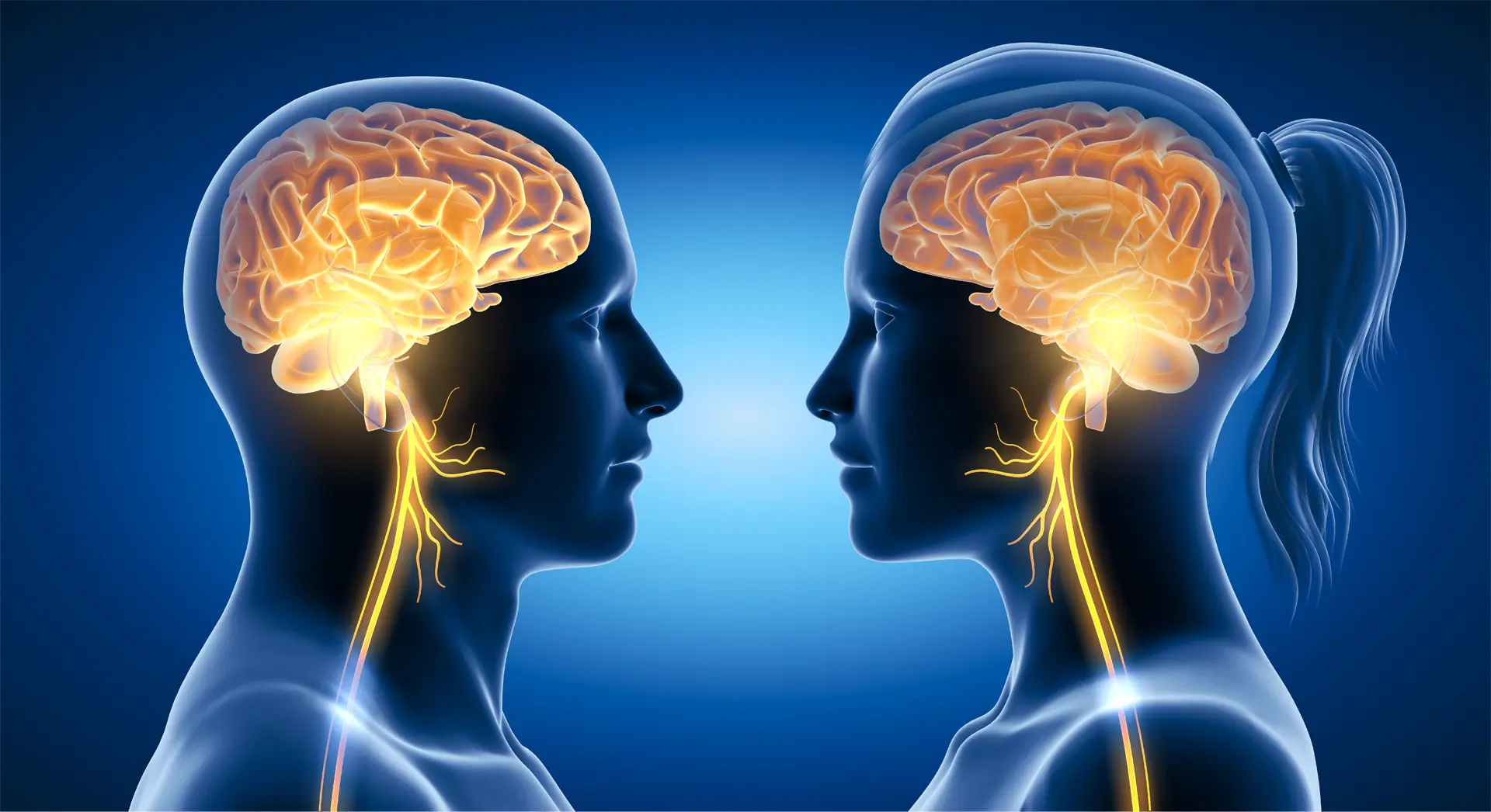
A movement is pushing to make yoga an Olympic sport. Competitors perform a series of difficult postures, which judges score based on how well they execute them.
I find this rather extraordinary. Not because I object to people demonstrating remarkable physical abilities, but because I wonder what it is they are actually demonstrating. And why we should call it yoga.
My friend Divya Kohli, a yoga and meditation teacher whose work I respect very much, has written an excellent article, Should Yoga Be an Olympic Sport? Eight Reasons Why Not. She was also quoted in The Guardian’s recent report on competitive yoga. Her objections go to the heart of something I have been thinking about for much of my teaching life.
“The abiding foundations of yoga require that you are no longer a servant to your ego. That means you do not seek external approval… This is horrifying. This is madness.”
Divya Kohli, quoted in The Guardian
What happens when we stop trying to get something right?
In yoga, as in much of life, we have become rather good at effort. We learn to apply ourselves, work harder, and achieve results. We often approach our bodies in much the same way. A posture becomes something to accomplish, and the more difficult it looks, the more value we seem to attach to it.
But is that necessarily helping us? Research on sensation, movement, attention, and stress offers some interesting ways to explore that question. It does not prove that one particular approach to yoga is right. I think it does, however, offer useful questions about the way we practise.
In this article
The Push to Make Competitive Yoga an Olympic Sport
Competitive yoga isn’t new, but the campaign for Olympic recognition has gained momentum. In June 2026, the first World Yogasana Championship took place in Ahmedabad, India, with 522 competitors from 79 countries. The event featured judges, televised routines, medals, and even anti-doping rules. India won 102 of the 114 medals (NBC Sports, October 2026).
The Guardian reported ambitions for yogasana to appear at the 2030 Commonwealth Games in India, possibly as a demonstration sport at the 2032 Brisbane Olympics, and ultimately at the Olympics. These are ambitions, of course, not confirmed places on the programme. International recognition and organising the sport remain obstacles.
The competition itself is called yogasana. Routines involve demanding postures, held and assessed using a points system. Interestingly, the organisers distinguish this from yoga more widely. They recognise that yoga is not simply a collection of physical shapes.
That seems an important distinction. I can appreciate the strength, discipline and dedication required. But if we reward the outward appearance of a posture, what becomes of everything we can’t see?
How Most Yoga Is Taught Today
Those familiar with my work know I question the emphasis on getting postures right. Much contemporary postural yoga is taught through sequences, alignment instructions and increasingly difficult variations. We learn where to put a hand, how to turn a foot, when to breathe and what the finished posture should look like.
There is nothing inherently wrong with enjoying physical exercise or learning a sequence. Good teachers work in many different ways. But a problem can arise when the shape becomes the purpose of the exercise. We begin to compare ourselves with an image, a teacher or the person on the next mat.
The leap from there to judging posture and awarding points may not be as big as we think. Competition makes the comparison explicit. Yet I wonder whether some of us are already competing, quietly, with ourselves.
A Different Approach: Scaravelli-Inspired Yoga
Vanda Scaravelli (1908–1999), whose book Awakening the Spine has influenced many teachers, has shaped my teaching, as have years of watching how people learn to move. What interests me is less the posture we finish with than how we arrive there.
We begin with the relationship between gravity, breath, and spine. We let the ground support the weight of the body. Rather than pulling ourselves into position, we notice what changes when we stop holding so much of ourselves up. The breath can move without our directing every inhalation and exhalation. The spine can respond.
Scaravelli described the spine’s movement as a wave. It is an image I find useful, though I would rather someone discover the experience for themselves than manufacture a wave because I told them to.
Something more fundamental also shapes the way I approach an asana. Our bodies have evolved to perform ordinary functional movements: turning, reaching, folding, rising and responding to the ground beneath us. A yoga posture need not be an extraordinary arrangement imposed upon the body. It can be a way to investigate movements that already belong to us.
Of course effort is involved. We need strength, and we need to move. The question is whether we can begin to distinguish between useful effort and tension that serves no purpose. That takes attention, and sometimes more patience than holding a difficult posture.
Two people may explore the same asana and look very different. I am quite happy with that. There is no single photograph of the result I am hoping to see.
Why Divya Says Yoga Is Not a Sport
Divya sets out eight reasons. She is clear that she has no objection to competition, or to practising yoga for its physical benefits. Her objection is that it. In her article, Divya offers eight reasons for opposing Olympic yoga. She is not objecting to physical skill or to sport itself. She is asking whether a practice concerned with loosening attachment to the ego can sensibly become an exercise in seeking marks and medals.
She draws on the Bhagavad Gita and its teaching about action without attachment to the fruits of action. She questions the risk of rewarding extreme flexibility and the message already conveyed by images of spectacular postures on social media. Perhaps most importantly, she asks what we mean by the word yoga.
I share those concerns. But we also need to be fair to the people who enjoy competing. They may find meaning, community and extraordinary skill in what they do. My objection is not to their athleticism. It is to the suggestion that the ability to reproduce and hold a shape can tell us who is better at yoga.
And this is where another question begins. What does all that striving do to the way we experience our bodies?
The Neuroscience of Not Doing
In class I often say, “Do less.” It can sound as though I am asking people to be lazy. Quite the opposite. Doing less while remaining attentive can be surprisingly demanding. We are accustomed to making something happen; we are less accustomed to noticing what is happening already.
Several areas of research may help explain why this matters. They do not directly test Scaravelli-inspired yoga, and I would not pretend otherwise. But they offer interesting parallels to what we observe in practice.
1. Effort drowns out sensation
In the nineteenth century, Ernst Weber and Gustav Fechner helped establish how our perception of a change depends on the size of the original stimulus. Add a small amount of weight to something light, and we may notice it; add the same amount to something much heavier and the difference can be harder to detect.
Moshe Feldenkrais used a memorable image: when lifting an iron bar, we are hardly likely to notice a fly landing on it. Norman Doidge discusses this connection between Feldenkrais and sensory discrimination in The Brain’s Way of Healing.
I think about this when someone is using a great deal of muscular effort to hold a posture. What small changes might they be missing? The shift of weight through a foot, the unnecessary gripping around the jaw, or the way the ribs respond to a breath?
Weber’s work does not establish that using less muscular effort always improves bodily awareness in yoga. It gives us a useful analogy, not a proof. But reducing the background effort and seeing what becomes noticeable is something we can investigate for ourselves.
2. Trying too hard gets in the way of movement
The movement researchers Gabriele Wulf and Rebecca Lewthwaite have examined the effects of where we direct our attention. Their work suggests that, for many motor tasks, attending to the effect of a movement can improve performance compared with concentrating on controlling the movements of individual body parts. Too much conscious control can interfere with automatic coordination.
That is interesting, although there is a complication. In Scaravelli-inspired yoga we often pay very close attention to sensations inside the body. Wulf’s research does not show that this is the best way to learn a movement. Indeed, many of the studies favour an external focus.
What I would distinguish is instructing the body from listening to it. “Turn the thigh, tighten the abdomen, tuck the pelvis” differs from noticing the pelvis’s weight and letting a movement develop. Whether this distinction maps onto the laboratory research is another question. In practice, it interests me enormously.
Perhaps we can be attentive without becoming controlling. Could that be part of what we mean when we speak of not doing?
3. Flexibility is a conversation with the nervous system
Flexibility is often talked about as though our muscles were simply pieces of material that need stretching until they become longer. But there is more to it than that.
In a 2010 review, Weppler and Magnusson examined why stretching increases our available range of movement. They found that changes after a single session, and after short programmes of three to eight weeks, could largely be explained by changes in stretch sensation and tolerance, rather than lasting structural lengthening. They also noted limits in what had been studied over longer periods.
This does not mean that tissues never change or that all limits are imagined. It means our experience of stretch is part of the picture. We can’t understand how far we move simply by looking at a muscle’s length.
It also makes me question the value of forcing ourselves further into a posture. What are we learning when we ignore discomfort to reach an arbitrary destination?
Yoga is associated with real injuries. Swain and McGwin estimated 29,590 yoga-related injuries treated in US emergency departments between 2001 and 2014; strains and sprains were common, and the rate was highest among older participants. The study does not tell us whether these people had pushed too far, nor does it establish that competitive practice caused their injuries. It reminds us to respect individual limitations, not to treat every demanding posture as evidence against.
4. Being judged is a stressor
In a review of 208 laboratory studies, Sally Dickerson and Margaret Kemeny found that situations involving social evaluation and a lack of control could produce particularly strong cortisol responses. Being assessed by others matters to us, sometimes more than we realise.
It is tempting to say that this explains competitive yoga. But a laboratory stress task is not the same as a championship, and some athletes thoroughly enjoy performing. We cannot assume that everyone who competes experiences it as a threat.
Nevertheless, I wonder about the effect of feeling watched and assessed in an ordinary yoga class. Are we still investigating our own movements, or are we now trying to look the way we think we ought to look? Mirrors, photographs, comparisons, and the language of “advanced” poses can subtly change the practice’s purpose.
We might not need a judge for that to happen. We can become our own judge very easily.
5. The breath, left alone
In the way I practise and teach, I generally do not ask people to count their breathing or impose a particular rhythm. When we become less occupied with holding ourselves in place, the breath sometimes changes of its own accord. It may settle, deepen or simply become easier to notice. There is no required outcome.
A systematic review by Zaccaro and colleagues in 2018 examined deliberately paced slow breathing. It reported associations with changes in heart-rate variability, brain activity and some measures of relaxation and arousal. That is interesting research, but it is not evidence that spontaneously allowing the breath to settle produces exactly the same effects. The distinction matters.
For me, the first question is not how many breaths we should take in a minute. It is whether we can notice what the breath is doing without immediately trying to improve it.
What “Not Doing” Feels Like
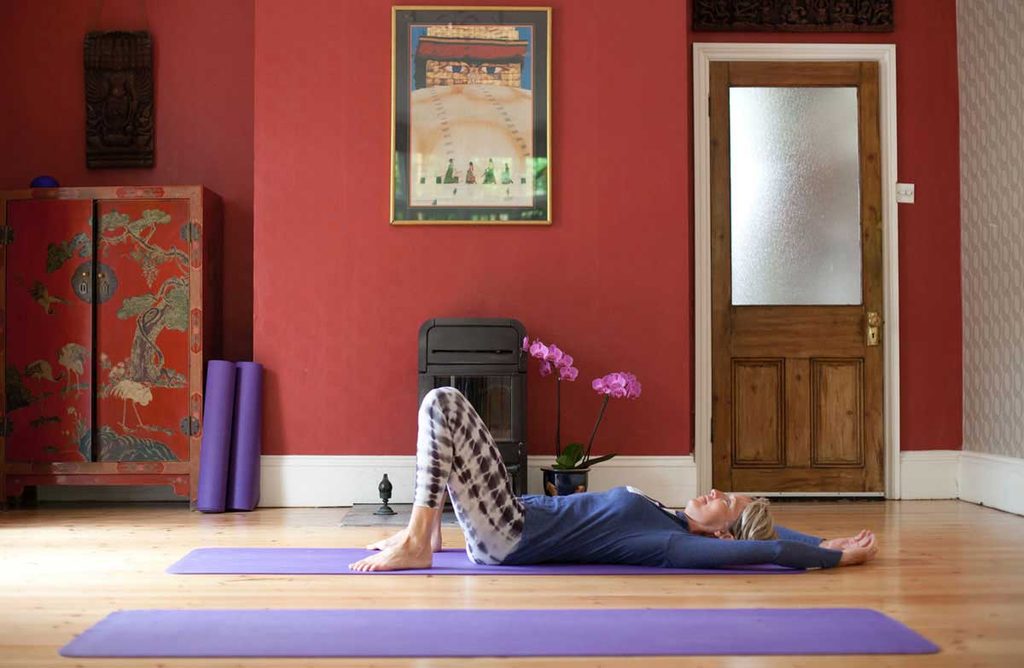
You don’t need to take my word for any of this. Try a small experiment. It takes only a few minutes, and you don’t have to feel anything in particular.
- Lie on your back with your knees bent and your feet on the floor, as comfortably as you can. Let your arms rest wherever they are easy.
- Notice where your weight meets the floor: the back of the head, the ribs, the pelvis and the feet. You do not need to correct anything.
- See whether you can give some of that weight to the floor rather than holding it up. Perhaps you notice a little unnecessary effort. Perhaps you do not. Let the breathing find its own way.
- Stay curious. Does anything change in the contact with the ground, the space around the ribs or the movement of the spine? If nothing changes, that is information too.
You might discover a small sense of release, or you might simply notice how difficult it is to stop interfering. Either is worth knowing. Nobody else could judge the experience by looking at you. That is rather the point.
What This Means in the Studio
I have taught yoga for more than twenty years, and I find myself increasingly interested in what becomes possible when we stop treating the body as a problem to solve. This does not make practice passive or easy. It asks for something more subtle: the ability to notice, to discriminate between tension and effort, and to be willing to change our minds.
I do not believe someone is better at yoga because they can touch their toes, balance upside down or hold an impressive shape. Those may be useful abilities, but they tell us very little about who the person is.
Perhaps the harder question is this: can we practise without turning it into another measure of success?
At my studio in Shanklin, we explore that together. If you are curious, you can join a Saturday introduction to yoga, a small Friday morning class, or arrange a one-to-one session. The next Friday six-week course begins on 6 November 2026.
For a fuller account of the argument against Olympic yoga, I encourage you to read Divya’s original article.
References
Chaudhuri, A. (2026, October 18). “This is horrifying, this is madness”: the row over competitive yoga. The Guardian.
Dickerson, S. S., & Kemeny, M. E. (2004). Acute stressors and cortisol responses: A theoretical integration and synthesis of laboratory research. Psychological Bulletin, 130(3), 355–391. https://doi.org/10.1037/0033-2909.130.3.355
Doidge, N. (2015). The Brain’s Way of Healing. Viking. (Discussing Moshe Feldenkrais and the Weber–Fechner law.)
Kohli, D. (2026). Should Yoga Be an Olympic Sport? Eight Reasons Why Not. Yoga with Divya.
NBC Sports (2026, October 23). India’s push to make yoga an Olympic sport.
Scaravelli, V. (1991). Awakening the Spine. HarperCollins.
Swain, T. A., & McGwin, G. (2016). Yoga-related injuries in the United States from 2001 to 2014. Orthopaedic Journal of Sports Medicine, 4(11). https://doi.org/10.1177/2325967116671703
Weppler, C. H., & Magnusson, S. P. (2010). Increasing muscle extensibility: A matter of increasing length or modifying sensation? Physical Therapy, 90(3), 438–449. https://doi.org/10.2522/ptj.20090012
Wulf, G., & Lewthwaite, R. (2010). Effortless motor learning? An analysis of attentional focus effects. In B. Bruya (Ed.), Effortless Attention (pp. 75–101). MIT Press. Read the chapter (PDF)
Zaccaro, A., Piarulli, A., Laurino, M., Garbella, E., Menicucci, D., Neri, B., & Gemignani, A. (2018). How breath-control can change your life: A systematic review on psycho-physiological correlates of slow breathing. Frontiers in Human Neuroscience, 12, 353. https://doi.org/10.3389/fnhum.2018.00353


